APEDA Registration in Chennai: Process, Required Documents, and Fees

Page Contents (6)
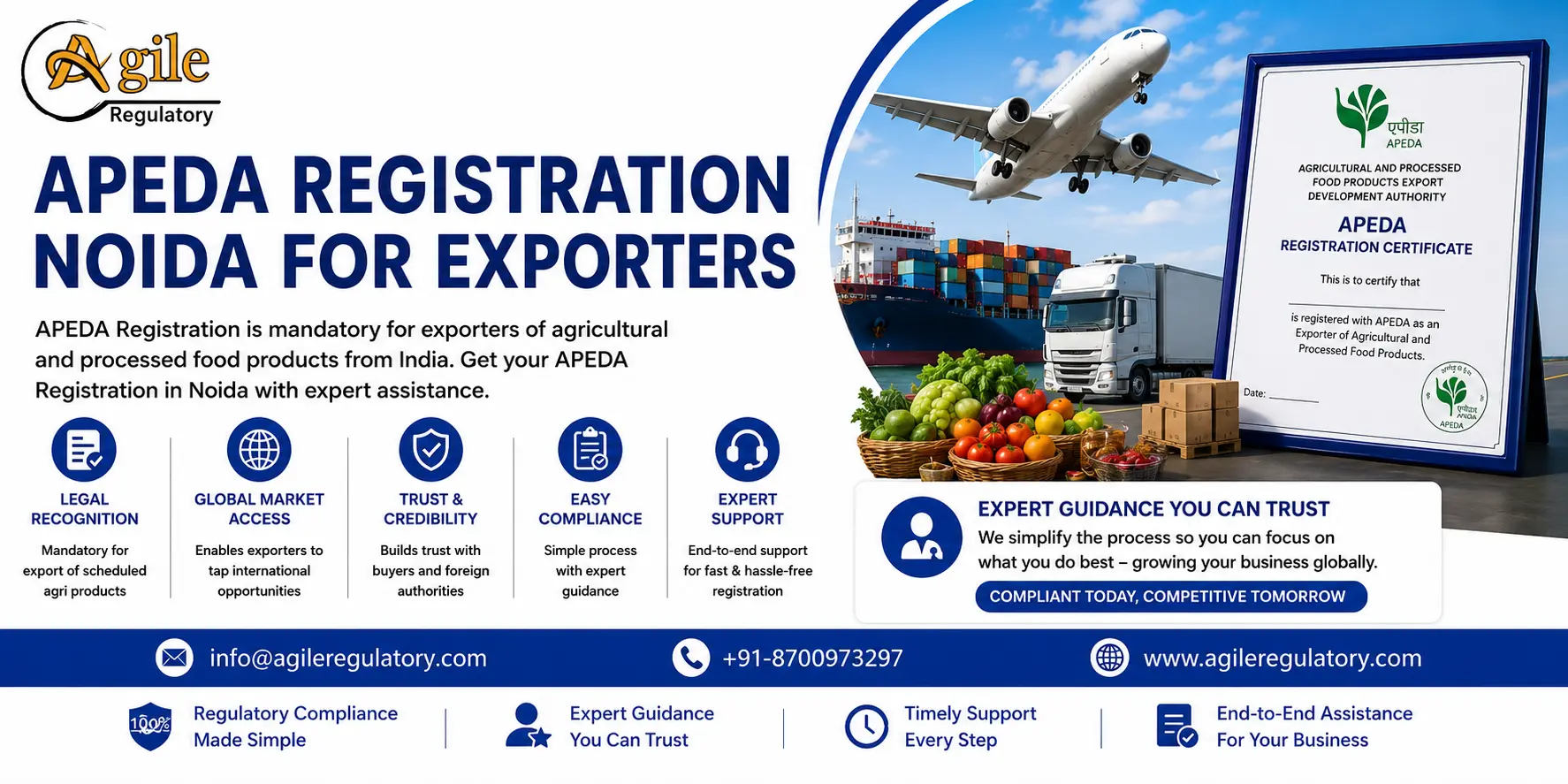
You must secure a Registration-cum-Membership Certificate (RCMC) from the APEDA (Agricultural and Processed Food Products Export Development Authority) Chennai office to legally export agricultural products from Southern India. The fastest path to exporting rice, fruits, vegetables or processed foods is by immediately obtaining the APEDA RCMC which serves as your mandatory license and unlocks all government export benefits including subsidies and financial support.
APEDA is the key body that controls and promotes India's massive food exports. The Chennai regional office is critical for businesses in Tamil Nadu, Kerala and Andhra Pradesh. This article will show you the exact process. We cover the documents you need, the fees you will pay, and the steps to ensure your food export business is compliant, quickly and correctly.
Mandatory Compliance Steps Before Application
You must get your foundational business licenses in place first. These steps are absolutely essential before you apply to the APEDA Chennai office.
- IEC Code: You must possess a valid Importer Exporter Code (IEC). You get this from the Directorate General of Foreign Trade (DGFT). You cannot start exporting rice, mango pulp or anything else without this code.
- PAN: You must have a Permanent Account Number (PAN) card in the name of your legal business entity. You also need a dedicated export current bank account.
- GST Registration: You need a valid Goods and Services Tax (GST) registration number. Exports are Zero-Rated. This means you can claim refunds on GST paid on inputs. This refund is a critical benefit for your finances.
- FSSAI License: You need a license from the Food Safety and Standards Authority of India (FSSAI). This confirms your processing and packaging unit meets national hygiene standards. You must determine if you need a Central or State FSSAI license based on your turnover and location.
APEDA Delhi Registration Process for Export of Agricultural Goods
Documentation and Application Details
You must upload clear digital copies of the following documents during the online APEDA registration:
- IEC Certificate Copy: A clear copy of your valid Importer Exporter Code.
- PAN Card: Copy of the company's Permanent Account Number card.
- GST Registration Certificate: Copy showing the tax registration details.
- Bank Account Certificate: A letter from your bank. This letter confirms your current account. It confirms your account is used for export business. The bank must issue this letter.
- FSSAI License Copy: A valid Food Safety license copy.
- Partnership Deed or Certificate of Incorporation: Proof of your business's legal existence.
- Chartered Accountant's (CA) Certificate: A certificate showing the total value of your exports for the last three years. New exporters must get a NIL turnover certificate from the CA, which is fine, but it is necessary.
Get Free Consultation!
The Online Registration Process
The APEDA RCMC application is done through the DGFT's centralized platform. The process is fully digitized now.
Step 1: Application on the DGFT Portal. You must go to the main DGFT website. You log in using your valid IEC details.
Step 2: Selecting APEDA. Under the RCMC application section, you must clearly select APEDA as your main Export Promotion Council (EPC). The system will automatically send your application to the Chennai regional office based on your address.
Step 3: Membership Category and Fee Payment. You select the correct membership category. You then pay the required fees online. This is done through the payment gateway. You must pay the one-time registration fee and the first year's annual fee.
Step 4: Scrutiny and Issuance. The APEDA Chennai team checks all the uploaded documents carefully. They focus heavily on the FSSAI license validity. If they find a mistake, they will raise an official query. You must answer any query quickly. Once approved, the RCMC certificate is issued electronically. You download and use this certificate immediately.
How to Export Agriculture Food Products from India? What is APEDA Certificate?
Financial Outlays and Compliance Lifecycle
The fees charged by the government body are not high. You must pay these two costs.
- Registration Fee (One-Time): This is a non-refundable one-time fee. It is usually set at ₹5,000 plus the applicable GST (18%).
- Annual Subscription Fee: APEDA charges an annual fee. This fee ensures your membership remains active every year. The fee amount is very low, usually around ₹1,000 to ₹2,000 plus GST.
Certificate Validity and Renewal
The APEDA RCMC is valid for a period of five years. But you must maintain its active status every year. You must pay the annual subscription fee every single year on time. If you miss this annual payment, your RCMC becomes inoperative. This means you cannot claim any government export benefit, which can seriously affect your business's cash flow.
Before the five-year expiry date, you must apply for renewal. You submit an application with updated documents and proof of your export turnover for the past five years.
Final Words
Starting an agricultural export business from Chennai is complicated. You must manage three main licenses: the basic IEC, the food-specific FSSAI, and the APEDA RCMC. The APEDA Chennai office is very strict about FSSAI compliance and the correct CA certificates.
Agile Regulatory specializes in simplifying the entire food export compliance path. We are experts in DGFT, FSSAI and APEDA regulations. We know the specific requirements of the Chennai regional office. Partner with Agile Regulatory today.

About the Author
View ProfileNishi Chawla
Content Writer & Compliance Specialist
Nishi is an expert content writer with expertise in Business Legal Compliances, Certifications, and Registrations — BIS, EPR, Medical Devices, Cosmetics, Drugs, and Import Export. She holds a B.Com from the University of Delhi and has been writing industry content since 2019.