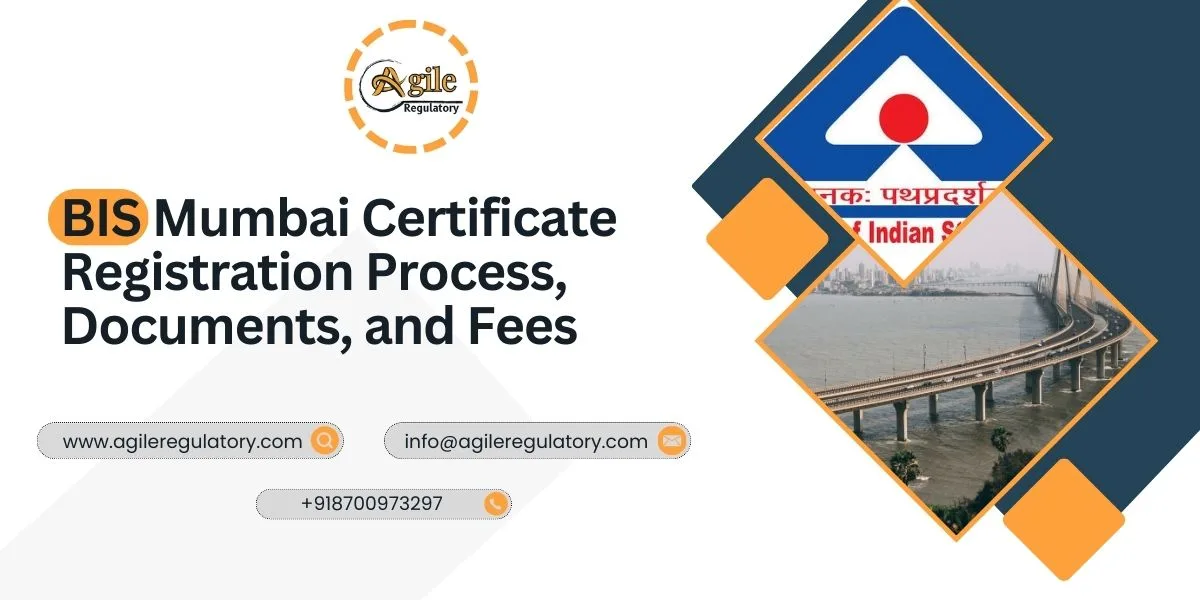
BIS Certificate Registration in Mumbai: Step-by-Step Process, Documents & Fees
Page Contents (8)
One of the first questions that manufacturers or importers ask when planning to sell products in India is How can I ensure that my Indian market accepts my product legally? The solution is evident. It is in the form of a BIS certification. BIS certification is an important requisite for various products in Mumbai, which is a leading commercial centre. This blog will help understand more about the certificate registration process with BIS Mumbai, the documents required, and the fees charged. This will clarify the process to allow businesses that would like to conform to Indian standards.
Why BIS Certification is Essential in Mumbai
Mumbai is India’s leading trade gateway. Ports here handle large imports and exports. As a result strict compliance is enforced. BIS certification assures that products are tested and they meet Indian safety rules. For customers it builds trust. For companies it reduces the risk of rejection by customs, seizure of goods or penalties. It is a sign of brand credibility
Key benefits of BIS certification in Mumbai include:
- Market Approval -Many products can not be sold in India without BIS
- Buyer Confidence: The consumer wants to own certified commodities
- Legal Compliance - It is compliant with the BIS Act 2016
- Business Advantage -Reputation and Tender Help on Certification
Categories of BIS Certification
In Mumbai, three major categories apply depending on the product and business model:
- ISI Mark Certification – For manufacturers producing goods that fall under mandatory BIS standards.
- BIS CRS (Compulsory Registration Scheme) – For electronic and IT products both imported and locally manufactured
- FMCS (Foreign Manufacturers Certification Scheme) – For overseas manufacturers exporting regulated products into India
Each category has specific rules but the overall procedure remains structured under BIS guidelines
Get Free Consultation!
BIS Registration Process in Mumbai
The BIS registration process is systematic. Below is a step-by-step breakdown:
Step 1 – Product Testing
Before filing an application, the product must be tested in a BIS-recognized laboratory. The test report ensures that the product meets prescribed Indian Standards
Step 2 – Application Filing
The applicant submits the application online through the BIS portal. Here details about the manufacturer, product, factory location and test reports are entered
Step 3 – Document Submission
All supporting documents must be uploaded with the application. This ensures smooth verification.
Step 4 – Scrutiny by BIS
BIS officials examine the application, test reports, and documents. If anything is missing clarification is requested.
Step 5 – Inspection (if required)
In many cases, BIS officers inspect the manufacturing site to verify processes and facilities.
Step 6 – Grant of License
Once the application is approved, the BIS certificate is issued. Manufacturers can then use the ISI mark or CRS mark on their products.
BIS Hallmark for Silver: A Complete Guide for Buyers in 2025
Documents Required for BIS Mumbai Registration
The documentation stage is critical. An incomplete file can delay approval. The key documents required include:
- Business License
- Factory Address Proof
- Test Reports from BIS Lab
- Trademark Certificate
- Factory Layout Plan
- List of Machinery & Equipment
- ISO Certificate (if available)
- ID & Address Proof of Directors
Having these documents in place before starting the process ensures faster registration.
BIS Certification Fees in Mumbai
The product category, application type and duration of license determines the BIS cost. Below is an overview:
|
Fee Component |
Description |
Amount (Approx.) |
|
Application Fee |
Paid at the time of filing |
₹1,000 – ₹2,000 |
|
Testing Fee |
Paid to BIS recognized labs |
₹20,000 – ₹50,000 (varies by product) |
|
Annual License Fee |
For use of ISI/CRS mark |
₹1,000 – ₹5,000 |
|
Marking Fee |
Charged based on production volume |
Varies by product |
These charges are indicative. Actual cost might varies
BIS Standards for Shampoo Manufacturing: Compliance and Testing in India
Timelines for BIS Certificate Approval
The timeline for BIS certification in Mumbai varies by scheme:
- ISI Mark Certification – Usually takes 4–6 weeks.
- CRS Registration – Can be completed in 2–4 weeks.
- FMCS (for foreign manufacturers) – Takes longer often 3–6 months due to factory inspection abroad
Efficient document preparation and timely responses to BIS queries can shorten the process
Common Challenges Faced in BIS Certification
Businesses in Mumbai often face hurdles during BIS registration. The most common issues include:
- Delays in product testing because of limited BIS-approved labs
- Incomplete documentation, which leads to repeated queries
- Factory inspection delays, especially for overseas manufacturers
- Understanding regulatory updates as BIS frequently revises product standards
To overcome these, companies often engage compliance consultants for guidance
Conclusion
BIS certification in Mumbai is more than a mere formality of law. It is an opening into customer confidence and long-term improvement of the business in the largest market in India. The steps entail testing, applications, documents, and fees- they all have to be accurate. One error may slow down the process of approval or add to the expenses.
Agile Regulatory has a major role to play here. Agile Regulatory, with rich experience in BIS certification and compliance regulations, will help businesses in Mumbai to be clear about each step forward. When it comes to document preparation through BIS coordination, the team makes sure that a smooth registration journey leads. Agile Regulatory is your trusted partner in case you desire to have your products registered under BIS standards in Mumbai painlessly.

About the Author
View ProfileNishi Chawla
Content Writer & Compliance Specialist
Nishi is an expert content writer with expertise in Business Legal Compliances, Certifications, and Registrations — BIS, EPR, Medical Devices, Cosmetics, Drugs, and Import Export. She holds a B.Com from the University of Delhi and has been writing industry content since 2019.