Carpet Export from India: Licenses, Documentation & Market Opportunities
Page Contents (10)
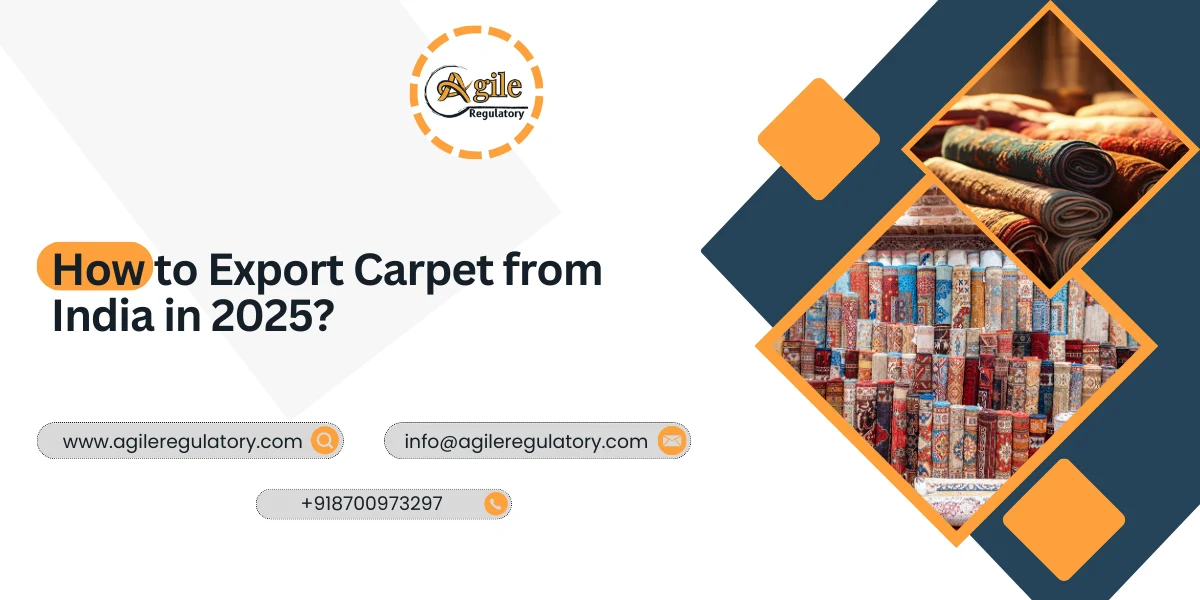
India is one of the biggest carpet exporters in the world. We have a long history of weaving handmade carpets. Indian carpets reach markets across Europe, USA and the Middle East. If you ask how to export carpet from India in 2025 the answer is simple yet layered you need the right registrations, quality checks, logistics planning and strong buyer connections. This blog explains every step in detail so that an exporter can move ahead with clarity.
Cashew Export from India in 2025: An Exclusive Guide for Exporters (CEPCI)
Step 1: Get the Right Business Setup
Before exporting, you need a registered business entity. Many exporters register as proprietorship, partnership, or private limited company. In 2025, most international buyers prefer dealing with firms that have a structured setup like private limited, since it builds trust.
You also need:
- Importer Exporter Code (IEC) from DGFT – mandatory for every exporter.
- GST registration – required for invoicing and compliance
- Udyam/MSME registration – helps small businesses get government incentives
Without these, exports cannot move through customs.
Step 2: Register with Carpet Export Promotion Council (CEPC)
CEPC is the main body under the Ministry of Textiles. It supports carpet exporters. Membership with CEPC is almost essential in 2025. Why? Because:
- CEPC issues Registration-Cum-Membership Certificate (RCMC).
- With RCMC, you can get into trade fairs, meet-ups and international exhibitions.
- It helps in claiming export incentives under Foreign Trade Policy
Get Free Consultation!
Step 3: Product Sourcing and Quality Control
Export success depends on product quality. Carpets pass through several checkpoints before reaching buyers. For handmade carpets artisans still use natural dyes and hand-knotting. But in 2025 exporters must ensure:
- No child labor in production.
- Use of sustainable raw materials
- Compliance with international safety standards
European Union has strict rules on chemical dyes. US markets demand flammability compliance. If exporters fail here, goods may be rejected at customs.
Step 4: Know Your Target Market
Different markets demand different carpet styles. A smart exporter in 2025 studies global trends.
| Market | Popular Carpet Style |
Buyer Preference |
|---|---|---|
| USA | Handmade wool rugs | Durability, eco-friendly |
| Europe | Silk carpets, dhurries | Luxury and artistic designs |
| Middle East | Persian-style hand knotted carpets | Intricate designs, large sizes |
| Australia | Cotton and jute rugs | Light, sustainable, affordable |
Doing market research saves money and avoids unsold stock.
Step 5: Pricing and Export Cost Calculation
Pricing is critical in exports. If you set a price too high buyers move away. Too low and you lose profit. In 2025 exporters face higher freight costs but India still offers competitive labor costs
Main costs to consider:
- Production cost – raw material + labor + finishing.
- Packaging cost – carpets need moisture-proof packing.
- Freight charges – air cargo for urgent, sea cargo for bulk.
- Custom duties and taxes – It depends on destination country
Step 6: Documentation Required for Carpet Export
Export moves only with proper paperwork. Any missing document can delay shipment. In 2025, Indian customs and global ports rely on digital systems, but hard copies are still required in many cases.
Key documents include:
- Commercial Invoice
- Packing List
- Bill of Lading or Airway Bill
- Certificate of Origin (from Chamber of Commerce)
- CEPC RCMC Certificate
- Insurance Certificate
Some buyers may also ask for third-party inspection certificates.
Step 7: Logistics and Shipping
Carpets are heavy. Exporters require good logistics support. Shipping costs less but it is time consuming. Air freight is applicable to small but urgent orders. In 2025, provision of warehousing and customs clearance is carried out by integrated logistics providers. Exporters must:
- Choose between FOB (Free on Board) or CIF (Cost, Insurance and Freight) terms
- Work with freight forwarders for smooth operations
- Track shipments digitally. As many ports now offer blockchain-based cargo monitoring.
Step 8: Payment and Trade Safety
International trade involves risk. Safe payment terms protect exporters. Common methods are:
- Advance Payment – secure, but rare.
- Letter of Credit (LC) – common and safe, ensures bank guarantee.
- Document Against Payment (DP) – buyer pays after documents are released.
- Open Account – risky, used only with long-term trusted buyers.
Exporters must take marine insurance. It covers cargo loss or damage.
Digital Marketing for Export Growth
Modern exporters no longer depend only on middlemen. In 2025 many Indian exporters build direct buyer connections through digital platforms. A professional website, social media campaigns and B2B listings help exporters reach global buyers. Paid ads targeting US or European importers also bring leads.
Digital presence is now as important as physical trade fairs.
Conclusion
Exporting carpets out of India in 2025 is filled with opportunity though it requires proper compliance and solid planning. Every step in the conversion of the IEC code to CEPC membership, documentation stage to all the global logistics should be correct. The lack of concentration in paperwork or compliance can delay your shipment and incur losses.
It is here that professional advice comes in. Agile Regulatory facilitates the exporters under CEPC, export certification and trade regulation. Upon their assistance businesses will be able to concentrate on the product and buyer development whereas the paper and approval processes are going smoothly
In this case, carpet exporting in 2025 be sure to onboard export professionals like Agile Regulatory to make eventualities better realized and easier accomplished in business.

About the Author
View ProfileNishi Chawla
Content Writer & Compliance Specialist
Nishi is an expert content writer with expertise in Business Legal Compliances, Certifications, and Registrations — BIS, EPR, Medical Devices, Cosmetics, Drugs, and Import Export. She holds a B.Com from the University of Delhi and has been writing industry content since 2019.