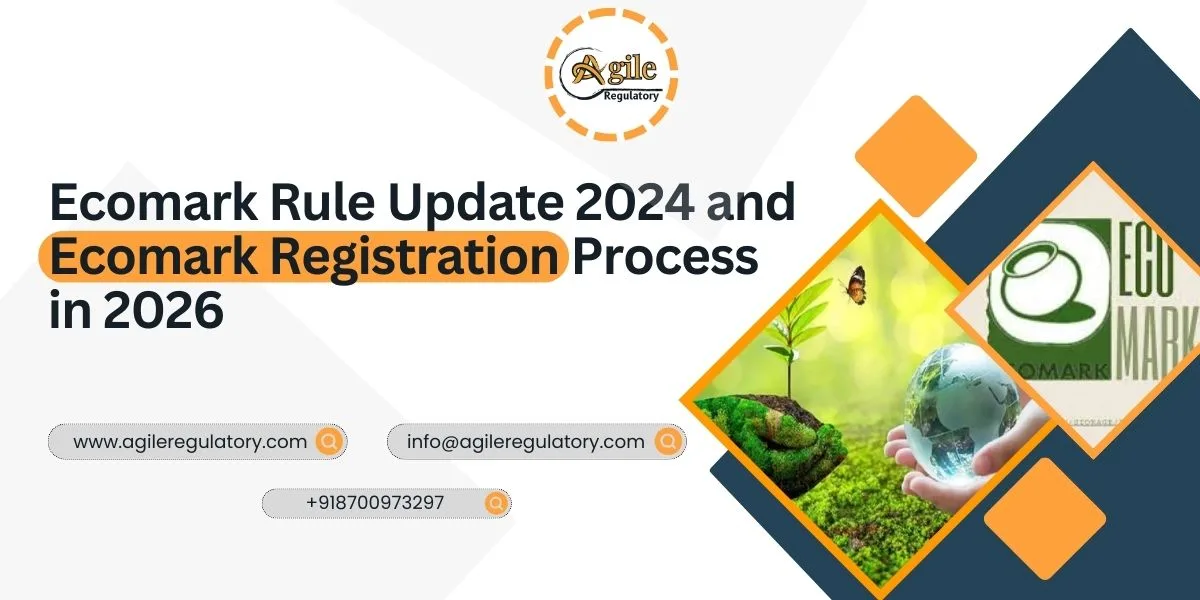
Ecomark Rule Update 2024 and Ecomark Registration Process in 2026
Page Contents (8)
India’s environmental policy landscape has taken a big leap in the past couple of years, and one of the most important updates is the Ecomark Rules 2024. officially notified by the Ministry of Environment, Forest and Climate Change (MoEFCC) on 26 September 2024, these rules replace the older Ecomark Scheme from 1991 and create a more modern eco‑labelling framework for products in India.
Let’s break down what’s new, what it means for businesses, and how manufacturers can register for Ecomark certification in 2026 in a clear, easy‑to‑follow way.
What is Ecomark & Why It Matters
- Ecomark is a quality label given to products that are environmentally friendly — meaning they meet specific standards that reduce harm to the environment throughout their life cycle.
- The aim is to help consumers make informed choices and encourage businesses to adopt greener production practices.
- With the new rules, Ecomark goes beyond the older scheme from 1991 and integrates stricter environmental principles.
Key Features of the Ecomark Rules 2024
The updated rules are designed to push sustainable consumption and support India’s environmental goals. Here’s what’s at their core:
1. Focus on Sustainability Over Simple Labelling
- The new rules promote products that minimise environmental impact — by reducing waste, saving resources, and encouraging recyclability.
- They are aligned with the LIFE (Lifestyle for Environment) mission, a government initiative to encourage sustainable lifestyles.
2. Clear Environmental Criteria for Products
To qualify for Ecomark certification, products are judged on several environmental factors, including:
- Resource Consumption: Efficient use of raw materials and energy.
- Waste & Emissions: Lower release of pollutants in manufacturing and disposal.
- Recyclability: Preference for products that can be reused, recycled, or made from recycled materials.
- Hazardous Substances: Minimised or no use of harmful chemicals.
This means that a product can’t just claim to be eco‑friendly — it must meet measurable criteria to earn the Ecomark label.
How to Get a Pollution NOC Certificate or License for Business?
Get Free Consultation!
Products Covered Under Ecomark Rules
Under the 2024 rules, a significantly wider set of product categories are included, such as:
- Household consumer goods
- Plastics and packaging materials
- Electronics and electrical goods
- Soaps, detergents, cosmetics
- Paints, lubricants, and other industrial supplies
These categories are chosen because they have measurable environmental impacts, and certification helps consumers spot true eco‑friendly products easily.
How the Ecomark Certification Works
Here’s an overview of what the certification process looks like:
1. Submission of Application
- Manufacturers or authorised agents must submit an application to the Central Pollution Control Board (CPCB).
- The application includes product information, documentation showing compliance with environmental criteria, and any supporting test reports.
2. Verification & Assessment
- CPCB or its appointed verifying agency examines the product to confirm it meets the Ecomark standards.
- This process involves checking documentation, analytical reports, and criteria fulfilment.
3. Granting Certification
- If the product successfully meets all criteria, CPCB grants the Ecomark certification.
- Once certified, the product can display the official Ecomark label — a trusted signal that it’s genuinely eco‑friendly.
4. Validity and Monitoring
- The certification is typically valid for three years.
- Manufacturers must provide annual compliance reports to maintain validity through 2026 and beyond.
What’s New in 2026 Registration Expectations
While the rules were notified in 2024, many businesses are planning registrations and compliance in 2026. Here’s how this plays out:
- Implementation Phase: After initial rule publication in 2024, regulatory authorities like CPCB and BIS have been rolling out implementation frameworks, guidance documents, and application templates in 2025 and early 2026.
- Registration Preparation: In 2026, businesses should be prepared with all documentation, product test reports, life‑cycle evidence, and environmental impact data ready for submission.
- Stronger Enforcement: The focus will be on accuracy, no greenwashing, and real environmental benefits — meaning documents must be precise and verifiable.
This means manufacturers should start early with internal audits and alignment to these criteria before applying.
Benefits of Ecomark Certification
1. Consumer Trust
Eco‑labels facilitate trust. With growing awareness around sustainability, consumers prefer verified eco‑friendly products.
2. Competitive Advantage
Products with Ecomark stand out in the market, especially with eco‑conscious buyers who value authentic environmental credentials.
3. Long‑Term Growth
As sustainability becomes more mainstream, early adopters of Ecomark enjoy better brand reputation and future readiness.
4. Encourages Cleaner Manufacturing
Businesses that pursue Ecomark often improve their processes, reduce waste and energy use, and ultimately align with global sustainability trends.
Practical Tips for Applicants
If you’re planning for Ecomark certification in 2026:
- Start with product assessment: Check whether your product meets environmental criteria before applying.
- Use professional testing labs: Independent labs help ensure your product’s claims are backed by data.
- Stay updated with CPCB/BIS standards: Regulatory requirements can evolve, so check official notifications regularly.
- Maintain records: Keep detailed compliance reports — they will be crucial for annual reviews.
Conclusion
The Ecomark Rules 2024 mark a major step toward sustainable consumption and green production in India. With clear environmental requirements, modern verification standards, and a stronger role for regulatory bodies like CPCB and BIS, the eco‑labelling landscape is now more robust than ever. As we move into 2026, businesses aiming for Ecomark certification should be proactive, compliant, and prepared with accurate documentation.
If you want seamless support through this process — from conformity assessment to complete regulatory compliance — AgileRegulatory can guide you every step of the way with expert assistance tailored to your product and industry needs.

About the Author
View ProfileVanshika Mathur
Content Writer
Vanshika is a skilled Digital Marketing Executive at Agile Regulatory, with over 5 years of experience in legal compliance and a unique blend of marketing expertise.