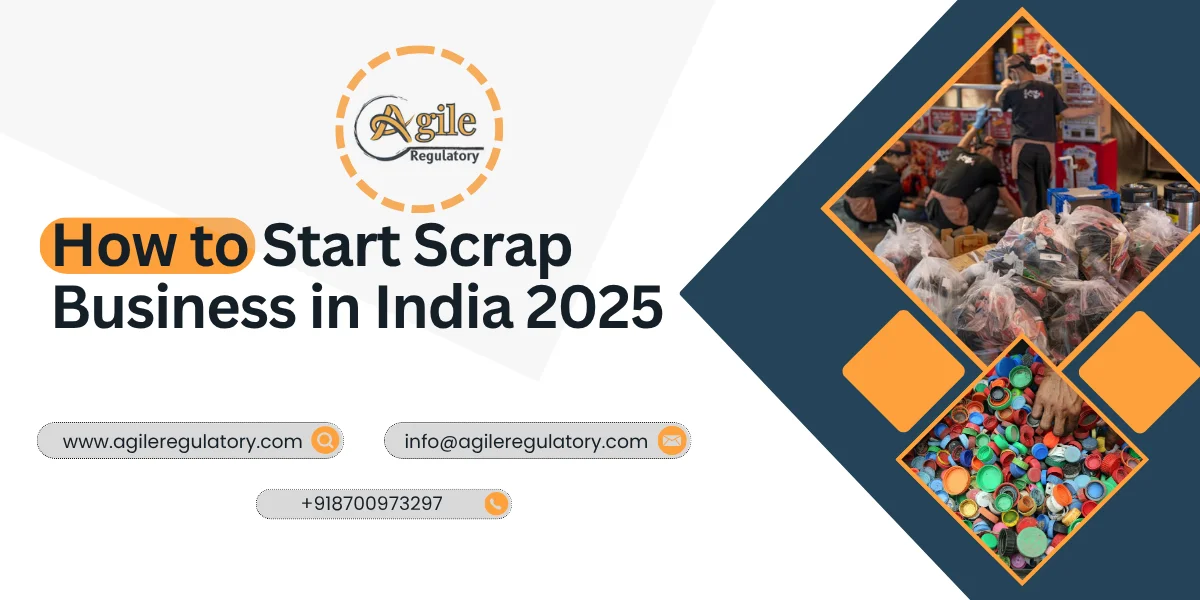
How to Start Scrap Business in India: Investment, License & Process 2025
Page Contents (8)
Scrap is not waste. It’s raw material — for steel, plastic, glass, electronics, and even paper. In India, recycled scrap fuels 70% of the steel industry. Copper and aluminum are recovered daily from old electronics. With sustainability becoming a national goal, demand for recycled materials is rising fast. This isn’t just cleanup work. It’s business
In 2025, the scrap market in India is booming. E-waste, plastic scrap, metal leftovers from factories, and even old vehicles are recycled and reused. All this makes scrap a valuable commodity if you know how to collect, sort and sell it smartly
Step 1: Choose Your Scrap Category
Before you start choose the type of scrap you want to deal in. Each type needs a different setup and finds different buyers
| Scrap Type | What It Includes | Where You Get It From |
|---|---|---|
| Metal Scrap | Iron, steel, copper, aluminum | Factories, workshops |
| Plastic Scrap | Bottles, drums, packaging waste | Bottling plants, households |
| Paper Waste | Cartons, newspaper, office paper | Shops, schools, publishers |
| E-Waste | Phones, cables, electronics | IT firms, banks, households |
| Tyres & Rubber | Worn tyres, tubes, conveyor belts |
Garages, factories |
Start with one category, then expand once you understand the flow.
Step 2: Register Your Scrap Business
In 2025 scrap trading falls under small enterprise or unorganized sector but still needs basic registration. Here’s what you must do:
Business Registration
- Apply for Udyam (MSME) registration through udyamregistration.gov.in
- Choose your business type (sole proprietor, partnership, or company)
GST Registration
- It is mandatory if your turnover crosses ₹40 lakhs (₹20 lakhs for services)
- Helps you invoice and sell to bigger firms
Local Trade License
- Issued by the local municipal body or panchayat
- Needed to operate in any commercial or industrial area
Pollution NOC (if applicable)
- For metal, plastic, or e-waste scrap, apply to your State Pollution Control Board (SPCB)
- Required to show safe collection and storage of waste
Once these are ready, your business becomes legal and visible.
Get Free Consultation!
Step 3: Arrange a Storage Yard or Collection Point
You don’t need a large space to start. Even 300–500 sq. ft. works if it is secure, clean, and accessible by small trucks. For large scrap (like iron or appliances), go for open yards with fencing.
Look for space:
- Near industrial areas or auto repair markets
- With good road access
- That meets basic fire and safety norms
Keep bins and racks for sorted scrap.
Step 4: Build a Reliable Supply Network
Without scrap, you can’t trade. To stay in business, build links with people who generate waste regularly.
Here’s where to begin:
| Source | What You Collect | How to Approach Them |
|---|---|---|
| Manufacturing Units | Metal chips, rejected parts | Meet plant managers directly |
| Housing Societies | Paper, plastic, e-waste | Speak to RWA or waste vendors |
| Retail Stores | Cartons, packaging items | Offer weekly pickups |
| Workshops & Garages | Tyres, metal, batteries | Create monthly payment deals |
| Local Kabadiwalas | Mixed scrap at low prices | Offer higher rates in return |
To stay ahead, always pay on time and offer pickup services.
Step 5: Get Your Buyers in Order
In 2025, buyers expect clear weights, quality sorting, and timely delivery. Your scrap must be clean, sorted, and packed.
Your buyers may include:
- Scrap recyclers – who melt or reuse the material
- Manufacturers – who use scrap as raw material
- Exporters – who ship scrap to other countries
- Online marketplaces – who aggregate demand
Use platforms like MSTC, IndiaMART, or Recykal to find them. Keep your pricing fair and transparent. This keeps your buyers loyal.
Step 6: Invest in Tools and Transport
To handle scrap well, invest in basic tools:
- Weighing scale
- Scrap cutter
- Gloves and masks
- Hand trolley
- CCTV camera
Also arrange a pickup vehicle—either a rented tempo or used auto-loader. You can partner with local drivers if you can’t buy one.
Step 7: Keep Records and Pay Taxes
In 2025, even small traders are expected to maintain clean records. It builds trust and avoids legal issues.
- Use a simple software or register book to track:
- Daily purchases and sales
- E-Way bills (if selling above ₹50,000)
- GST payments
- Vendor and buyer details
This helps when you apply for loans, scale up, or sell to government-approved buyers.
Step 8: Grow the Right Way
Once you set up and stabilize, think of growth. Expand by:
- Adding new scrap categories
- Starting pickup services
- Partnering with factories
- Joining online scrap platforms
- Getting ISO certification (if needed for export)
Scrap may look small, but it runs like any other business. When done right, it pays well and grows with time.
Final Thoughts
The scrap business in India is no longer informal. In 2025, it is one of the smartest ways to earn steady income while helping the environment. With the right license, fair practices, and organized setup—you can build a solid scrap business from day one.
Whether you’re a first-timer or switching from a different trade, scrap gives you control over costs and freedom to scale.

About the Author
View ProfileNishi Chawla
Content Writer & Compliance Specialist
Nishi is an expert content writer with expertise in Business Legal Compliances, Certifications, and Registrations — BIS, EPR, Medical Devices, Cosmetics, Drugs, and Import Export. She holds a B.Com from the University of Delhi and has been writing industry content since 2019.