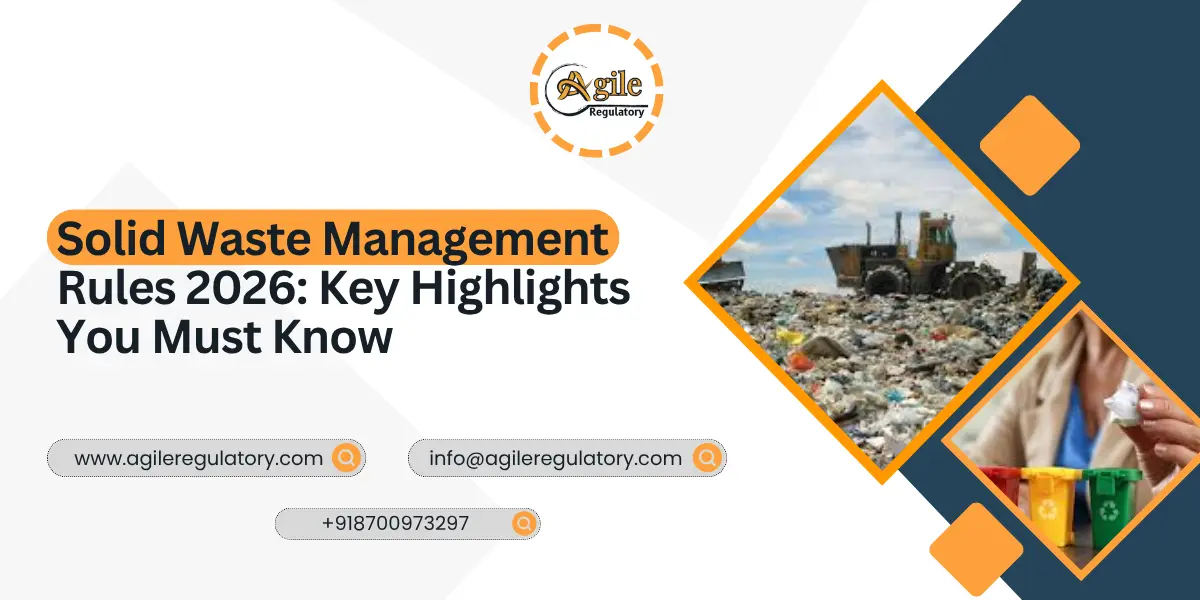
Solid Waste Management Rules 2026: Key Highlights You Must Know
Page Contents (14)
If you think waste management in India is still just about “dry and wet waste,” you’re already behind.
Because the 2026 rules don’t just update the system; they change how responsibility is assigned.
Earlier, waste was treated mostly as a municipal issue. Now, it’s your responsibility too. Whether you’re running a business, managing a housing society or operating a commercial space, you’re part of the compliance chain.
And if you ignore that penalties are real
So instead of looking at this as another environmental rule, you need to understand what has actually changed and what you’re expected to do differently in 2026
What Changed in 2026?
The Solid Waste Management Rules 2026 replace the earlier 2016 framework completely
They were notified under the Environment (Protection) Act and came into effect from April 1, 2026
This isn’t just a revision. It’s a shift from:
-
basic compliance becomes measurable accountability
-
municipal responsibility becomes shared responsibility
-
disposal becomes resource recovery
Four-Way Segregation Is Now Mandatory
This is not optional anymore.
You now have to segregate waste into the following:
-
wet waste (food, biodegradable)
-
dry waste (plastic, paper, metal)
-
sanitary waste
-
special care waste (batteries, bulbs, medicines)
Earlier, most people barely followed two categories. Now there are four.
And enforcement is stricter.
If you don’t segregate, collection systems may reject your waste and penalties can apply
Get Free Consultation!
Responsibility Has Shifted And It’s Clearer Now
One of the biggest changes is how responsibility is defined.
Earlier, it was spread across authorities.
Now, it’s specific.
You are responsible for:
-
segregating waste at source
-
ensuring proper disposal channels
-
not mixing waste categories
Local bodies are responsible for:
-
collection
-
processing
-
infrastructure
And this division is no longer vague.
Bulk Waste Generators
If you run:
-
a large office
-
a residential society
-
a hotel
-
an institution
You may fall under the category of Bulk Waste Generator (BWG).
The definition has been expanded based on:
-
area
-
water usage
-
waste generation
And if you qualify:
You must:
-
process wet waste on-site
-
or arrange authorized disposal
You can’t just hand everything over to the municipality anymore.
The “Polluter Pays” Rule Is Now Enforced Properly
This existed earlier. It wasn’t enforced well.
Now it is.
If you:
-
don’t segregate waste
-
provide false data
-
operate without authorization
You can face environmental compensation (penalties).
This is not a warning system anymore; it’s financial enforcement.
Digital Tracking
One of the biggest structural changes is the introduction of a centralized digital system.
This system tracks:
-
waste generation
-
collection
-
processing
-
disposal
Everything is logged.
And that means:
-
less room for informal handling
-
more accountability
-
easier audits
If you’re a business, you’re expected to maintain records.
Landfills Are No Longer the Default Option
The 2016 rules allowed landfills to continue as a major disposal method.
The 2026 rules aim to reduce that.
Focus is now on:
-
recycling
-
composting
-
waste-to-energy
-
resource recovery
Landfills are being treated as a last option, not the main system.
The circular economy is now part of the rules.
This is not just environmental language.
It changes how waste is treated.
Instead of throwing away, the system pushes:
-
reuse
-
recycling
-
conversion into energy or materials
Waste is now seen as a resource.
That shift affects:
-
industries
-
manufacturers
-
service providers
Special Provisions for Different Regions
The rules recognize that not all areas function the same.
So there are specific provisions for:
-
hilly regions
-
tourist areas
-
islands
For example:
-
decentralized waste processing
-
tourist user fees
-
controlled waste handling systems
This wasn’t clearly defined earlier.
Local Authorities Have More Accountability
Municipal bodies now have to:
-
prepare action plans
-
allocate land for waste processing
-
ensure implementation
They’re also monitored through:
-
central and state-level committees
-
reporting systems
So responsibility is no longer just assigned; it’s tracked.
Why Were These Rules Needed?
India generates massive amounts of waste daily and a large portion is still not processed properly
The earlier system failed mainly because the following
-
segregation rates were low
-
accountability was weak
-
enforcement was inconsistent
The 2026 rules try to fix that by making compliance measurable and enforceable.
What This Means for You
If you're
-
a business owner
-
running a commercial facility
-
managing a large property
You are directly affected.
You may need to:
-
set up segregation systems
-
install composting units
-
maintain records
-
register on digital portals
This is no longer optional compliance.
Where Will Things Still Go Wrong?
Not in the rules.
In implementation.
Common issues already visible:
-
lack of awareness
-
poor infrastructure
-
inconsistent enforcement
Even the Supreme Court has pointed out that rules alone don’t fix the problem execution does.
So expect strict enforcement in phases, not instant perfection.
Conclusion
The Solid Waste Management Rules 2026 are not just an update; they change how waste responsibility is shared.
You are no longer just a waste generator. You are part of the system.
If you don’t adapt segregation, compliance, and documentation, you face penalties and operational issues.
If you do adapt the process becomes manageable
If you want to understand how these rules apply specifically to your business and avoid compliance gaps, working with a team like Agile Regulatory can help you set up the right systems from the beginning instead of fixing problems later

About the Author
View ProfileNishi Chawla
Content Writer & Compliance Specialist
Nishi is an expert content writer with expertise in Business Legal Compliances, Certifications, and Registrations — BIS, EPR, Medical Devices, Cosmetics, Drugs, and Import Export. She holds a B.Com from the University of Delhi and has been writing industry content since 2019.